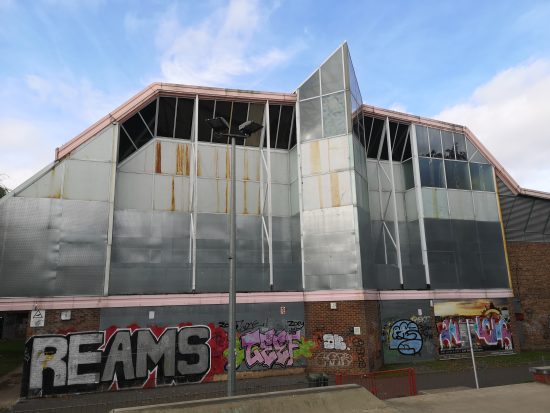
What can be done with a redundant swimming pool? This question is a pressing one for my home city, Winchester, where the 1980s leisure centre closed four years ago. The pool where I swam regularly for 20 years, and where both of my children took their first baby strokes in the learner pool before moving up through the grades, is now sitting empty. It’s been replaced by a new centre at the edge of town, complete with a 50-metre pool. So far, though, the local authority has not found a use for the old pool, and, despite a few false starts, there seems to be no plan for what to do next. The site of countless birthday parties, galas, leisure swims, and so much more is now desolate, inevitably visited below the radar by urban explorers.
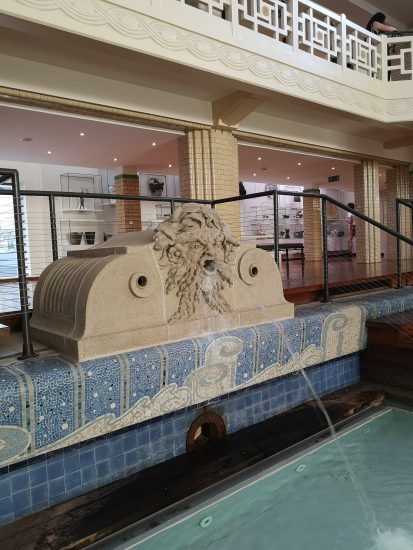
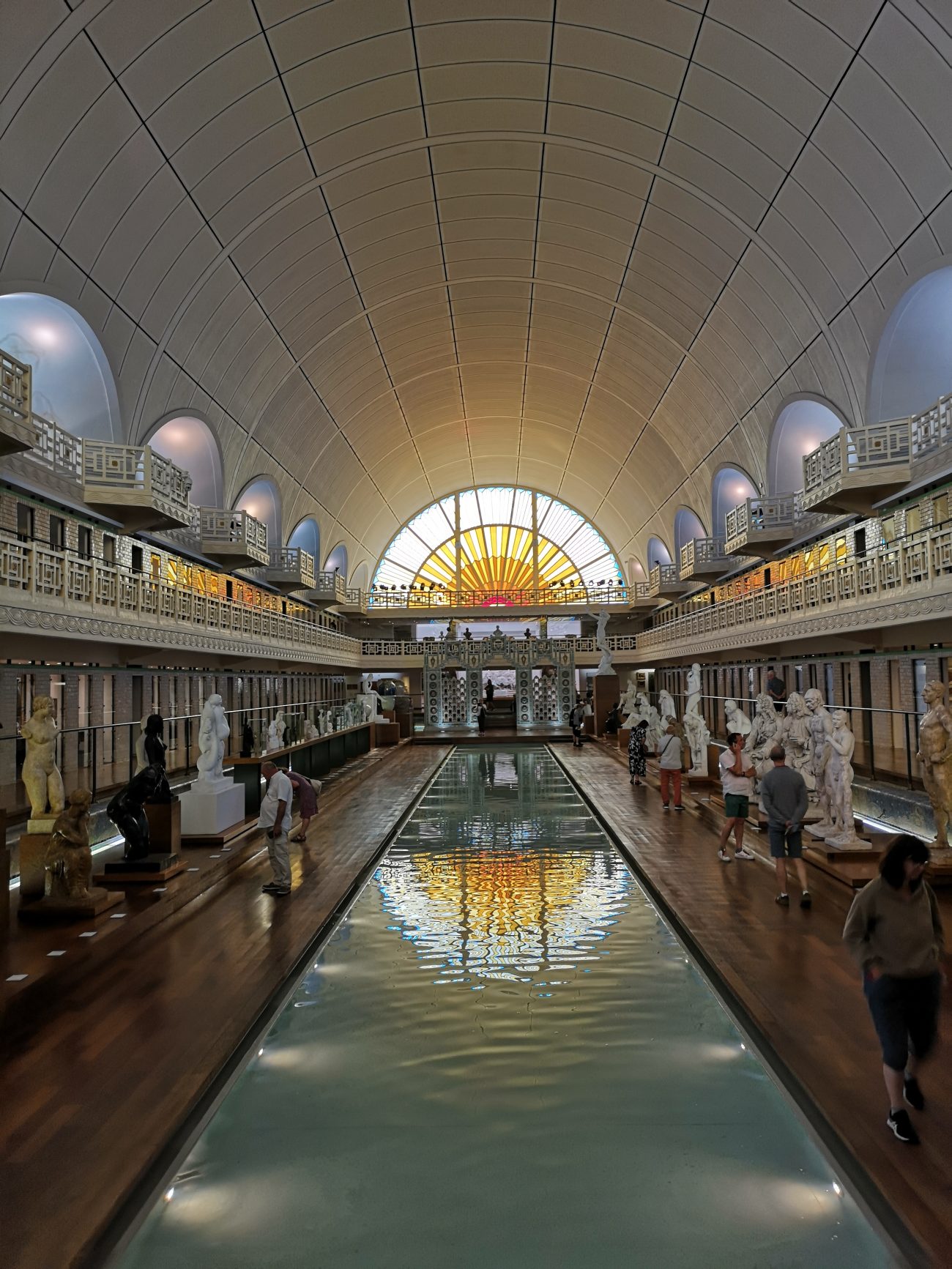
The potential for transformation of such a space came home to me in July, when I had a spare day in Lille, where I visited La Piscine in the town of Roubaix, a short train ride from the city centre. In 1927, the Mayor of the socialist-run local authority, Jean Lebas commissioned French architect Albert Baert (1863-1951) to build what they hoped would be one of the best public pools and bath-houses in France. Baert had already designed swimming baths in Lille and Dunkirk, and he brought a progressive public health agenda to the project for Roubaix. He designed the pool for sport and leisure swimming, along with bathing facilities for the workers form the town’s textile factories. Baert used many Art Deco motifs in the building’s design and decoration, including a stained-glass window featuring the rays of the sun, Egyptian-style tiling patterns, and enamel bricks for interior walls. The complex, on Rue de L’Espérance, opened in 1932 and was an immediate success.
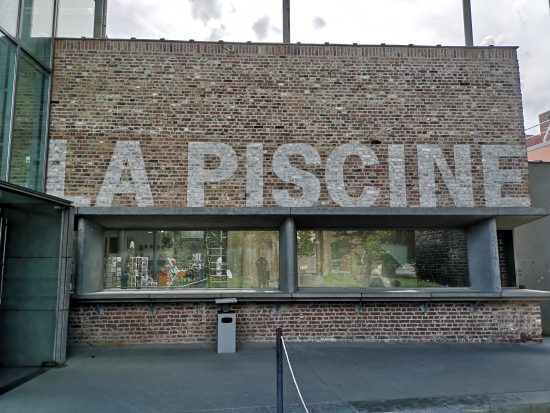
As is common for pools, though, changes in technology, design, and expectations meant that the pool was obsolete by the early 1980s, and it closed in 1985 when a new pool opened out of the town centre. The pool could easily have faced demolition, but it was saved and converted for a new use in the early 1990s. The town owned various art collections, some dating back to the 1830s, but lacked a building to display them in, and, in 1992, the council agreed to convert Braet’s pool into a new museum of art and industry. Paris had already shown, with the Musée D’Orsay, what could be done by converting a railway station into a gallery, and Roubaix’s pool went through a similar change under Jean-Paul Philippon, the architect behind D’Orsay. The new gallery, named La Piscine, opened in 2001, and expanded in 2018.
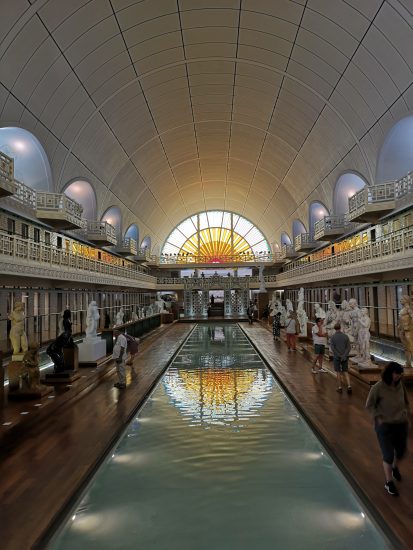
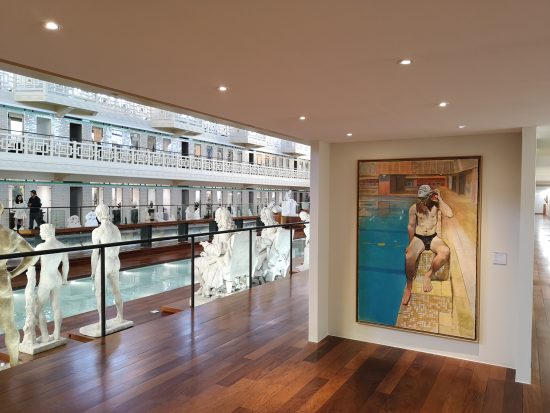
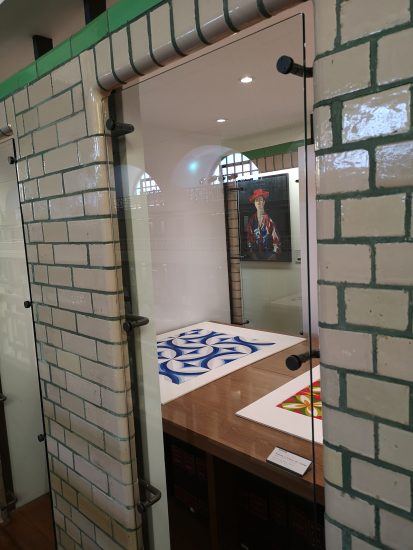
The result is stunning. The main gallery’s shape is based around the old main swimming pool, with a remnant of the pool maintained as the room’s central focus. Paintings and statues frame the water, and the water reflects the artworks back. The old shower cubicles and changing rooms serve as small display spaces, some showcasing swimming costumes, aquatic-inspired clothes and objects, and artefacts from the pool’s history, such as lane floats, signs, and club badges. Elsewhere in the complex, the original painted signs constantly remind visitors of the building’s history, like the old board advertising the pool’s opening hours and the ‘Baignoires – Hommes/Dames’ sign above the internal doors. Much of the art relates to sports and pastimes, including Lucian Jonas’ early twentieth century paintings of bicycle races, Remy Cogghe’s earlier ‘The Cockfight’, and many statues and paintings with swimming and bathing themes.
As Ian Gordon and Simon Inglis have shown in Great Lengths, their study of the history and heritage of British swimming pools, there are plenty of models of ‘adaptive re-use’ once pools close. Their examples include Small Heath Library and Baths in Birmingham being re-developed as a mosque, Leamington’s baths becoming a library, and pools in Sheffield and Kendal finding second lives as pubs. What these examples and La Piscine show is that pools that can no longer support swimming can be successfully converted to carry on serving their communities. Here’s hoping that the planners in charge of Winchester and other pools now facing a similarly uncertain future can avoid demolition, and develop imaginative projects that will keep these buildings that are such an essential part of every town’s heritage.