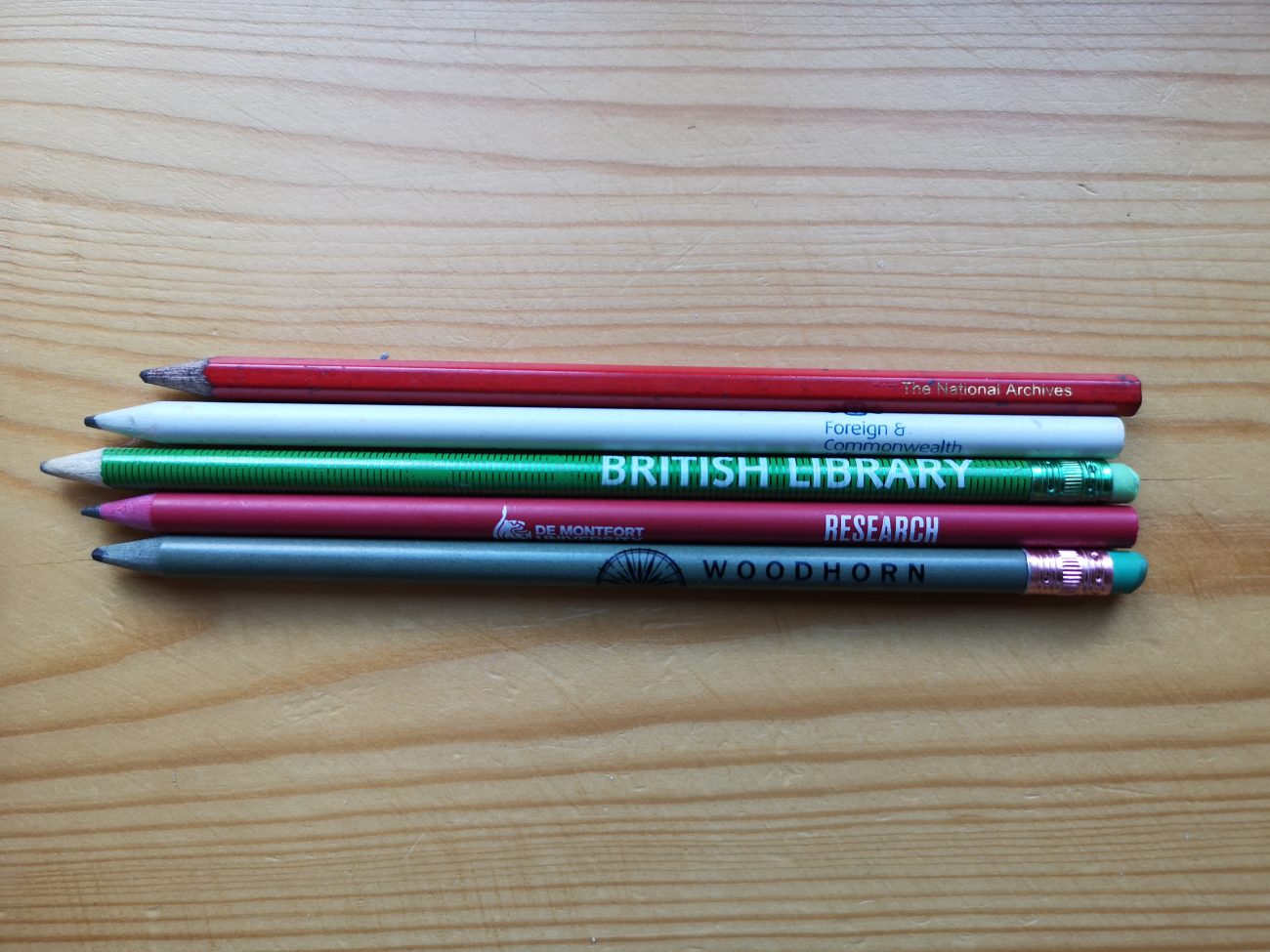
I’ve recently been spending quite a bit of time in archives and research libraries. It’s great to get back to the coalface of historical research after a few lean years, and the work is feeding into my current book on the Cotswold Olimpicks very nicely. Being back has reminded me of a talk I gave remotely a couple of times during the pandemic, when archives were closed, once at a British Library event and once to sports history PhD students at an event convened by the University of Lausanne. Both organisations invited me to reflect on my personal archival research journey over the course of my career, from my 1987-91 PhD to now, concentrating to on Olympic – in the widest sense – and Paralympic history. Now that I’m back in the archives, I thought I’d share the text of that talk here for a different audience. These are purely personal reflections, but I hope they resonate with other researchers out there.
I started my PhD on sports diplomacy including Olympics in 1987. I’m currently working on a long history of the Cotswold Olimpicks. In between, I have researched various aspects of the Olympics in British history for different project and through different lenses – including diplomacy, amateurism, gender, venues and infrastructure, legacy, heritage, community, locality) – and some aspects of Paralympics, along with the variety of events that were called Olimpick/Olympic/Olympian from the early seventeenth century onwards. It’s been, to steal from The Beatles, a long and winding research journey amongst collections from across England and Wales.
I want to reflect on that research journey through three themes: the diversity of collections; the rise of the GLAM (Galleries, Libraries, Archives and Museums) sector’s interest in Olympic history; and the impact of the digital shift in archives.
The Diversity of Collections
Every historian has their own journey. Mine has gone from diplomatic history based on Foreign Office files in the UK National Archives (TNA, formerly the Public Record Office (PRO)) to distinctly local and community work on long history of Cotswolds. Where did I find insights on Olympic & Paralympic history in the obvious and obscure parts of the UK archive ecosystem?
I used TNA for files from the Foreign Office, Home Office, Cabinet Office, the Metropolitan Police and more. I’m old enough to remember the dreadful coffee machine in the downstairs space at the PRO where smoking weas allowed. I used the British Library for published sources and the press, including many happy days at the Newspaper Library in Colindale, and I’m delighted to have seen that the Colindale trolleys survived the move to St Pancras.
University archives and special collections also figured in my research, including the University of Birmingham for Harold Abrahams and Amateur Athletics Association, the University of East London for the British Olympic Association’s (BOA) archive, the University of Westminster for the Regent Street Polytechnic’s papers on the 1908 Olympics, Churchill College Cambridge for Phillip Noel Baker’s archive, and, most recently, Kings College Cambridge for CR Ashbee and the Cotswold Olimpicks. Then there have been county and city archives, including Hampshire for 1948 Olympic events that happened in the county; the London Metropolitan Archives for the capital’s Olympic history; various London borough local studies collections for local press coverage; Hertfordshire and Buckinghamshire archives for Olympic administrator Lord Desborough’s papers; Shropshire archives for the Wenlock Olympian Games; Gloucestershire’s collections for the Cotswold Olimpicks; Northumberland archives at Woodhorn for the Morpeth Olympic Games; and the Local Studies Collections in Llandudno for the time that the Liverpool Olympic Festivals went to Wales.
Then there have been private organisational archives, like the BOA when they held their own papers at their Wandsworth office, Stoke Mandeville Hospital for the early years of para-sports in Ludwig Guttmann’s days, the Wenlock Olympian Society, and the Chipping Campden Historical Society.
What themes emerge from this list? Aside from getting big picture information from the sources, there’s a great pleasure in finding tiny stories in unexpected places. Some of my favourites have been finding, in the Leicestershire archives, the lease for land in Chipping Campden for C R Ashbee to build a swimming pool which forms a tiny part of the long history of the Cotswold Olympicks; handling the Stationers Hall’s registered illustrations at TNA for designs for Olympic artwork in 1908, long before IOC protected all things Olympics; the temporary members’ book for the Polytechnic Harriers with autographs of visiting athletes for 1908 at Westminster; how the press coverage for the 67th Morpeth Olympics in 1948 made passing reference to the other Olympics going on in London; Philip Noel Baker’s musings on competing at the Stockholm Olympics of 1912 in Churchill College and how it blended with his pacifism to give him an internationalist mission with sport at its core; condolence letters to Lord Desborough from IOC members on the death of his sons in the war; how many police, and from what divisions, were on duty for the 1908 Marathon, and the pubs along the route where the refreshment stations were; and how the Shrewsbury Show included Olympic Games in 1860 alongside qausi-medieval pageantry. This blend of the personal, the sporting, the political, and the organisational; this ability to switch lenses from the local to the global; this willingness to find the expected and the extraordinary: this is what allows us as historians to tell our stories, make our connections, link our events to contexts.
And contexts are crucial: we have to see archives in their proper setting so that we can see the Olympics and Paralympics as parts of processes undertaken by people and organisations. The best example came from my first look at ephemera for Stoke Mandeville’s early wheelchair games that fed into the development of the Paralympics. This trip included meetings in the hospital’s sport centre, the discovery of records of inter-ward contests, an honours board, and medical photos of patients from the 1940s. This mix was a clear reminder of the medical and therapeutic nature of Guttmann’s wheelchair games. Another favourite was working on the original minute book of the Wenlock Olympian Society, researching in the building where William Penny Brookes started it all, and seeing his 1891 note that they would like to invite ‘Baron Coubertine’ back as he made such an impression. This is a footnote in Olympic history that stresses the importance of this small county event in the transnational networks behind the Games
Rise of GLAM interest
In his history of sport in France, Richard Holt recalls how when he ordered books on sport at the Bibliothèque National in Paris, the librarian gave him a withering look and seemed to suggest that is he was interested in sport, he should go for a run and not waste library resources. I had a similar moment in the National Library of Wales in 1989 when I was researching the 1938 Germany v England football match. I consulted players’ memoirs in the morning, then academic diplomatic history books in the afternoon, to be met with a quizzical ‘That’s a bit of a change from Stanley Matthews’ from the librarian. Since then , I’ve witnessed a growth of recognition across the GLAM sector that sport matters, and that GLAM institutions have a role in protecting and disseminating its history. London hosting the 2012 Olympics and Paralympics was obviously a major factor here. The BOA is a classic example of this shift. Formerly, the BOA held its own archives at their head office in Wandsworth Plain. Access was by appointment, with an informal element of vetting involved; the library was also the conference room, so I had to make myself scarce whenever my research trips clashed with a meeting; and they had lost some archive materials due to a flood meeting room. By moving to the University of East London’s archive in line with London 2012, their records are nor professionally cared for an accessible to all. We can see this trend elsewhere, like Buckinghamshire Record Office taking wheelchair sport materials, or TNA creating an Olympic timeline to promote its holdings. Think of the huge range of exhibitions and events in GLAM that took place in 2011 and 2012. A few personal examples which I visited and, in some cases, spoke at included the Art Library Society (ARLIS) Olympic-themed conference, the Olympic Posters at V&A Bethnal Green, Olympic art talks at Dulwich Picture Gallery, and the British Library’s exhibition of Olympic philately. It remains a great shame that, despite all of this interest and goodwill, there was no Olympic Museum built as part of the 2012 legacy programme.
The Digital Shift
As a researcher, I would class the growth of digital techniques in archives and libraries as revolutionary in methods, access, and possibilities. Looking back at my earliest days at the British Library, for example, I remember the physical catalogue with its own mysteries. At the PRO, I remember manually working through the index of Foreign Office correspondence, searching under every sport-related theme, then translating the original FO file reference to the PRO’s call number, then ordering the document, and making manual transcription of huge amounts of text as the only form of reproduction was expensive photocopying, beyond my student budget. Think now of the online catalogues that are searchable 24/7 from anywhere, the curated themed collections, the ability to photograph sources at will, and the e- and digitised versions of some sources. It’s impossible to work out time savings in archive and therefore costs. This is just a taste, before I even think of the myriad of digitised resources from historical mapping to image research, oral histories to the Internet Archive for early books.
Have we lost anything in this shift? There’s potentially a drop in serendipity, though online resources can bring their own versions of that. Digitised records increase convenience but take out the tactile – nothing can beat touching the paper that the people you’re researching have touched. There’s also a risk of losing the sense of place as we research more online, which is part of understanding the exact context of an archive. The sensible solution is to recognise interplay between the digital and the physical and be realistic about how we use both.
I’d like to end with a few quick thoughts about what comes next. We definitely need for new conversation about national collections. Do we need an Olympic Museum, for example? As London was the first city to host the Olympics three times, and the Games have reached many other parts of the UK, I would argue that it would enhance the GLAM ecosystem to have such a site, which could also house a research centre and events. Bear in mind that the Olympic Museums Network includes sites in many places that have never hosted the Games, including Estonia, Israel, Peru, Qatar, and Slovakia. We need to think about the control of Olympic language and branding that challenges the historical record, and make sure that we are always accurate to the record and not to the current official version. This is particularly pertinent in Paralympic history, as the name has evolved greatly over time. Finally, we need to collect anti-Olympic activist records and ephemera, akin to V&A Rapid Response Collecting. This needs to be a historical rescue operation: think of oppositional materials against the 1936 Berlin Olympics, the student protests and massacre in Mexico City in 1968, dissident materials in Moscow 1980, and human rights materials for Beijing 2008 and Sochi 2014. It also needs to contemporary, and must be global, multilingual, physical, digital, visual, and oral with due care for safety of the creators, some of whom are taking great risks.
The landscape has changed massively since I gingerly made my way into the Public Record Office for the first time back in 1988. The bulk of the changes have been for the better. They have increased access and awareness, and given sports history a place at the table that it used to lack. Let’s all work to manage the drawbacks, and use this glorious range of collections to find out more.
